Organometallic Compounds And Catalysis (COMORCA)
- Home Page
- Research Interests
- Group Members 0
- Publications 0
- Projects 0

The group "Organometallic Compounds and Catalysis" (COMORCA) belongs to the Department of Organic and Inorganic Chemistry of the University of Oviedo.
The group "Organometallic Compounds and Catalysis" (COMORCA) belongs to the Department of Organic and Inorganic Chemistry of the University of Oviedo. The group also takes part of the "Instituto Universitario de Química Organometálica Enrique Moles" (IUQOEM), and it is associated to the National Research Council of Spain (CSIC) through the Institute of Chemical Research of Seville.
Home Page
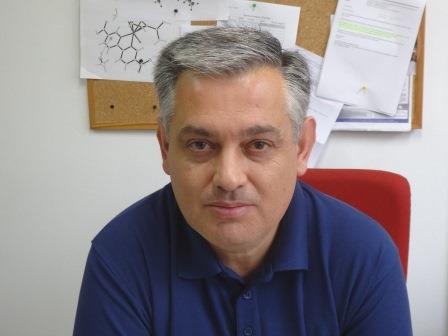
Group Leader
Group Updates
Research Interests
The group works within the Organometallic Chemistry field with a strong focus on the development of new homogeneous catalysts and their applications in the synthetic organic chemistry, giving special attention to those catalytic reactions of practical application in industry. During the last years, we have been working essentially with organometallic compounds of Groups 7-11 metals, which have been studied in a number of catalytic processes for the regio- and stereoselective formation of new C-C and C-heteroatom bonds. Moreover, most of catalytic transformations developed by the group are operative in non-conventional reaction media (water, ionic liquids, glycerine, etc.) and usually proceed with high atom-economy, in complete accord with the principles of Green Chemistry and in response to the modern requests of industry. In summary, we try to develop efficient and selective chemical processes for sustainable chemistry.


Our experimental work includes the following main lines action:
The design of new functionalized ligands (mainly P- and N-donors) able to induce the solubility in water of their complexes and/or able to promote cooperative effects during the catalytic events (activation of organic substrates by hydrogen bonding, acting as BrØnsted bases, etc.)
The study of the coordination chemistry of these ligands in different organometallic fragments (Ru, Rh, Ir, Re, Au and Pd compounds), with structural characterization and assessment of reactivity patterns of the resulting complexes.
Application of the complexes synthesized as catalysts in a variety of organic processes including, among others, olefin isomerization reactions, cycloisomerizations of functionalized alkynes, hydrations of multiple bonds, cycloadditions, etc.
Studies about the recycling of the most active species are also performed by the group taking advantage of the concept of biphasic catalysis or by anchoring the catalytically active species on solid supports (clays, magnetic nanoparticles, polymers, etc.).
Group Members
Publications
Edit Publication
Projects
No Projects
