









Background
The evolution of automated technology has permeated almost every aspect of daily life, from self-checkout machines in retail to automated delivery services. In the beauty and grooming industry, automation has largely remained confined to tools and devices designed to assist professionals, rather than completely replacing them. However, the demand for on-demand, time-efficient personal care services is steadily increasing, as consumers seek convenience and accessibility.
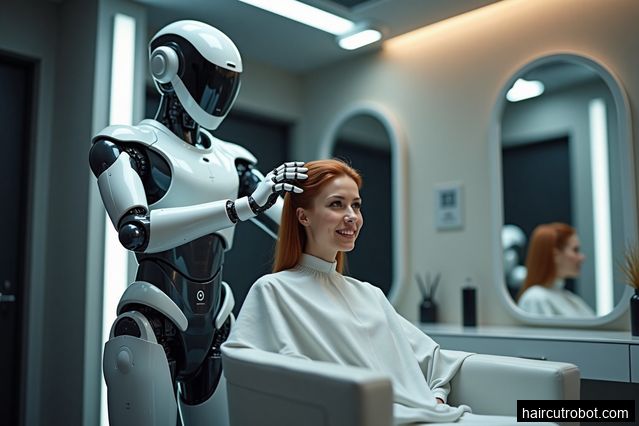
A growing trend in the service industry is the shift toward self-service solutions, where customers can engage with technology directly, bypassing traditional service models. Innovations such as automated kiosks and vending machines have successfully introduced self-service in areas like food, drinks, and even healthcare products. These systems provide customers with an intuitive, efficient, and often contactless experience, appealing to modern consumer expectations.
Inspired by this, the concept of an automated hair-cutting machine—similar to a vending machine—has the potential to radically transform the grooming industry. The core idea is to offer a quick, efficient, and affordable solution for basic haircuts, delivered through an entirely self-service model. By utilizing cutting-edge technologies such as AI (Artificial Intelligence), robotics, and sensor-based systems, the machine would be able to provide personalized haircuts tailored to each user’s preferences.
As AI continues to advance, its role in the grooming sector is becoming increasingly significant. AI-driven algorithms are already being employed in industries such as fashion, healthcare, and beauty, with AI systems capable of recommending styles, colors, and cuts based on face shape, hair texture, and personal preferences. In the case of an automated hair-cutting machine, AI technology could take this further by analyzing the user’s head shape, hair thickness, desired style, and even predicting the outcome based on past data. The AI system would continuously improve its accuracy and precision, learning from each interaction to provide increasingly better results over time.
In addition to AI and robotics, the future of this concept would rely heavily on smart sensors for safety, ensuring that the system operates efficiently while minimizing the risk of injury. With contactless payment systems and sanitization mechanisms built into the machine, the customer experience would be seamless, hygienic, and fast.
The concept of a hair-cutting vending machine marks a significant step toward the future of automated self-care, where AI and robotics empower consumers to take control of their grooming needs in a way that is not only convenient and time-saving but also personalized and consistent. As the world continues to embrace smart technologies, the automated hair-cutting machine could become an essential service in public spaces, redefining the way we think about personal grooming in the digital age.
This background focuses on the technological potential of AI and how it could evolve the hair-cutting process in a self-service, automated format.
AI Implementation Specifics
The integration of AI into the automated hair-cutting machine represents the heart of the technology, enabling personalized and precise haircuts without human intervention. Below are some key areas where AI would play a central role:
1. Facial and Hair Analysis
AI algorithms would use computer vision to analyze the user's face shape, head dimensions, and hair texture. This process would involve:
3D Mapping: High-resolution cameras or depth sensors scan the user’s head to create a 3D model. This helps the machine determine the best angle for cutting and ensures even trimming.
Hair Density and Texture Recognition: AI would analyze the thickness, length, and curvature of the user’s hair. This allows the machine to customize the haircut based on the hair type, whether straight, curly, or wavy, ensuring precision for different textures.
2. Personalized Style Recommendations
Leveraging AI-driven styling algorithms, the machine can suggest haircut options based on the user’s face shape, lifestyle, and preferences. The process would involve:
Style Matching: AI compares the user's face shape to a database of hairstyles and suggests cuts that best complement the individual’s features.
User Preferences: Through an easy-to-use interface, customers can input desired styles (e.g., short, medium, fade, etc.). AI uses this information to recommend the best options that align with both the facial structure and hair type.
3. Real-Time Feedback and Adjustment
AI’s machine learning capabilities would continuously improve over time, making the system more accurate with each use. Real-time feedback could include:
Cut Precision: Sensors track the blade’s position in real time, adjusting its movements to avoid errors and ensure that the cut matches the requested style.
Continuous Learning: AI would store user preferences, feedback, and performance data, learning to optimize the haircutting process for future users, improving both the quality and speed of the haircut.
4. Predictive Styling and Outcome Prediction
AI can predict the final result of the haircut based on:
User Feedback Loop: Before the machine starts cutting, users can preview a digital representation of what the style will look like on their face using an augmented reality (AR) interface.
Outcome Prediction: AI predicts how the haircut will grow out over time, offering suggestions for maintenance or even future trims.

5. Smart Safety Systems
Safety is paramount when it comes to any automated device involving blades. AI-powered safety mechanisms would play a critical role:
Real-Time Monitoring: AI monitors the cutting process, ensuring that the machine doesn’t deviate from the desired pattern and doesn’t cause harm (e.g., cutting too deep or too fast).
Emergency Response: In case of malfunctions or abnormal behavior, the system can trigger automatic emergency stops or alerts to prevent accidents.
Smart Sensors: Sensors would detect if the user’s hand or face is too close to the cutting mechanism and activate automatic braking systems to reduce risk.
Challenges in AI Implementation for Automated Hair-Cutting
While the potential for AI in automated haircuts is vast, there are several challenges that need to be addressed to make this technology viable and safe for widespread use:
1. Accuracy and Consistency
Challenge: Achieving consistently accurate haircuts through automation, especially with the wide variability in hair types and head shapes, is a significant technical hurdle.
Solution: Advanced machine learning algorithms would need to continually improve based on user data and feedback. Rigorous testing and calibration across various hair types and textures would be essential to ensure uniform results.
2. Complexity of Human Hair
Challenge: Human hair is dynamic and often requires subtle adjustments based on natural movements, growth patterns, and texture changes. Replicating a professional stylist’s understanding of these nuances through AI can be challenging.
Solution: A combination of AI and human-guided machine learning is necessary. AI can learn from a professional stylist’s database of techniques to predict the most suitable cutting paths but would need to continuously adapt to natural variations.
3. User Trust and Comfort
Challenge: Many people may be hesitant to trust a machine with a potentially irreversible personal decision, such as their hairstyle. They may feel uncomfortable with the idea of using a machine without a professional present.
Solution: Offering a preview mode via augmented reality (AR) could increase trust, allowing users to visualize and adjust their haircut before starting. Providing clear safety features and a strong customer support system would also help alleviate concerns.
4. Hygiene and Maintenance
Challenge: Keeping the system clean and hygienic is a priority, especially with the use of shared machines. Users will expect the machine to be sanitized between uses to ensure safety.
Solution: The system could include automated sanitization protocols that clean blades and surfaces between users. Additionally, disposable caps or covers for the cutting tools could be incorporated to further promote hygiene.
5. Technology Reliability and Support
Challenge: Relying on AI and robotic systems requires high levels of reliability. Malfunctions or errors could lead to unsatisfactory results or even injuries.
Solution: Building the system with redundancy in both hardware and software can ensure that in the event of a failure, the system can quickly detect and correct issues. Additionally, offering remote diagnostics and support will help resolve issues efficiently.
6. Market Acceptance and Legal Implications
Challenge: Some consumers might not be comfortable with the idea of a fully automated, AI-driven hair-cutting machine, and there could be legal implications around liability in the event of accidents.
Solution: Extensive testing, liability waivers, and insurance coverage will be essential to mitigate risks. Additionally, clear regulations and certifications should be established to ensure the safety and legality of the technology.
AI Implementation and Challenges in Automated Hair-Cutting Systems
The concept of an automated hair-cutting machine, akin to a vending machine, represents a significant leap forward in the convergence of AI, robotics, and consumer self-service. However, successfully implementing AI in such a system presents both immense opportunities and considerable challenges. This section delves into the specifics of how Artificial Intelligence (AI) can be effectively integrated into the system, while also addressing the key challenges that must be overcome to ensure its viability in a commercial setting.
AI Implementation Specifics
The integration of AI into an automated hair-cutting machine lies at the core of its functionality, enabling precision, personalization, and safety without the intervention of human professionals. Below are several key areas where AI would play a critical role in the system:
1. Facial and Hair Analysis Using AI
AI-driven computer vision systems will be used to accurately analyze a user’s head shape, hair texture, and facial features. This allows the system to make real-time decisions about cutting patterns and style recommendations based on individual characteristics.
3D Mapping and Sensing: Using high-resolution cameras and depth sensors, the system will generate a three-dimensional model of the user’s head. This will help the machine understand the contours of the scalp, enabling precise and uniform cuts.
Hair Type and Density Recognition: AI will analyze factors such as hair thickness, length, and curl pattern to adapt the cutting mechanism. For example, the machine will adjust blade speed and cutting technique depending on whether the hair is straight, wavy, or curly, ensuring consistent results for a wide range of textures.
Solution: Governments and regulatory bodies would need to establish guidelines and safety protocols for automated grooming systems. Insurance policies and liability waivers could help mitigate potential legal risks. Ongoing certification processes for AI systems in the grooming industry would ensure that these machines meet high standards of quality and safety.
5. Regulatory and Legal Challenges
The introduction of a fully automated, AI-driven hair-cutting machine would raise questions about liability, consumer protection, and regulatory approval. Establishing clear legal frameworks and industry standards will be crucial to ensuring that these systems are safe and effective.
4. Technological Reliability and Scalability
A significant barrier to the widespread deployment of an automated hair-cutting system is ensuring its technological reliability. With so many moving parts, including AI algorithms, robotic arms, and sensors, the system must be fail-safe and capable of handling the high-volume use expected in public spaces.
Solution: Building the system with redundant systems and continuous diagnostics will help mitigate the risks of malfunctions. Additionally, remote monitoring and the ability to perform software updates and maintenance remotely would enable the system to stay reliable over time. Partnerships with maintenance providers and user feedback loops will also help ensure smooth operations.
3. Hygiene and Maintenance of the System
In public-facing systems, maintaining hygiene is paramount, particularly in high-traffic environments like airports or shopping malls. The system must ensure that users feel comfortable with shared equipment.
Solution: The hair-cutting machine could feature automated sanitization systems to clean the cutting blades, surfaces, and user interface after each use. Disposable caps for the cutting mechanisms and regular self-cleaning protocols would be essential to maintaining cleanliness between users.
2. User Trust and Comfort with Automation
For many consumers, the idea of having an automated machine perform a haircut can be daunting. Trust in the system’s ability to deliver a quality result, along with concerns about safety, could hinder widespread acceptance.
Solution: Building consumer trust will require transparent communication, robust user education, and a clear demonstration of the machine's capabilities. Offering a preview mode using augmented reality (AR) where users can visualize their new style before cutting begins will help foster confidence. Additionally, safety features like emergency stops, real-time monitoring, and visible machine maintenance logs will reassure users of its reliability.
Challenges in AI Implementation for Automated Hair-Cutting Systems
While AI’s potential to revolutionize the grooming industry is undeniable, there are several key challenges that must be addressed before this technology can be scaled and adopted widely. Below are some of the primary obstacles:
1. Accuracy and Consistency Across Hair Types
AI's ability to deliver precise, consistent haircuts on a wide range of hair types and textures remains one of the greatest challenges. Hair is inherently dynamic, and cutting it with consistency—especially when faced with a variety of hair types, shapes, and growth patterns—requires sophisticated technology.
Solution: To address this, the system must be calibrated to a wide range of hair types, including straight, wavy, curly, and coily hair. Training AI models with diverse datasets covering various hair textures will be crucial. Additionally, a hybrid system that combines machine learning and real-time feedback will help the machine adapt to individual hair growth patterns.
4. Safety Mechanisms Powered by AI
Ensuring safety in an automated environment where sharp blades are in close proximity to the skin is critical. AI-driven safety protocols will ensure that the system operates smoothly while preventing accidents.
Sensor-Based Safety: Proximity sensors will monitor the user’s head and neck position, ensuring the machine adjusts the cutting depth and speed to avoid contact with sensitive areas. The system will also detect any sudden movements or irregularities, triggering immediate emergency stop functions to halt the cutting process.
Real-Time Monitoring: AI will continuously monitor the cutting process, tracking the blade’s position to ensure that no errors occur. In case of a malfunction or anomaly, the system will immediately alert users and activate fail-safe mechanisms.
3. Real-Time Adjustments and Feedback
One of the most advanced features of AI in this system will be the ability to learn and adapt in real-time during the haircut process. This allows the system to correct any deviations or issues immediately, ensuring the outcome meets the user’s expectations.
Adaptive Learning: Through continuous machine learning, the AI will improve its predictions and cutting techniques based on real-time data from previous users. For example, if a user selects a specific fade style, the system will learn from the results of that style to improve its subsequent iterations.
Predictive Accuracy: The AI will be capable of predicting the final result by cross-referencing user inputs and physical data with its styling algorithm. Before cutting begins, users could even preview the finished haircut via an augmented reality (AR) interface, giving them confidence in the decision-making process.
2. Personalized Style Recommendations
AI algorithms will allow users to select or receive personalized recommendations for their ideal haircut based on their facial shape, hair type, and preferences.
Style Matching: AI will compare the user’s facial geometry with a comprehensive database of hairstyles, offering suggestions for cuts that best complement their face shape (e.g., oval, square, round).
User-Input Preferences: Through an intuitive touchscreen interface, users will input preferences such as length, style (e.g., fade, buzz cut, layered), and even hairline shape. The AI will process this input and suggest the most appropriate options that match the user’s goals and physical features.
Conclusion
The development of an AI-driven, automated hair-cutting machine represents a transformative opportunity within the grooming industry. While the challenges are significant, particularly in areas such as accuracy, trust, and safety, the potential for AI to enhance the grooming experience is immense. By combining advanced AI algorithms, robotics, and sensor technologies, this system could offer a personalized, efficient, and cost-effective solution for users seeking a convenient grooming experience. However, overcoming the technological, user-centric, and regulatory challenges will require careful planning, rigorous testing, and ongoing innovation. As AI continues to evolve, the dream of automated, self-service haircuts could soon become a mainstream reality, redefining the future of personal care.

